
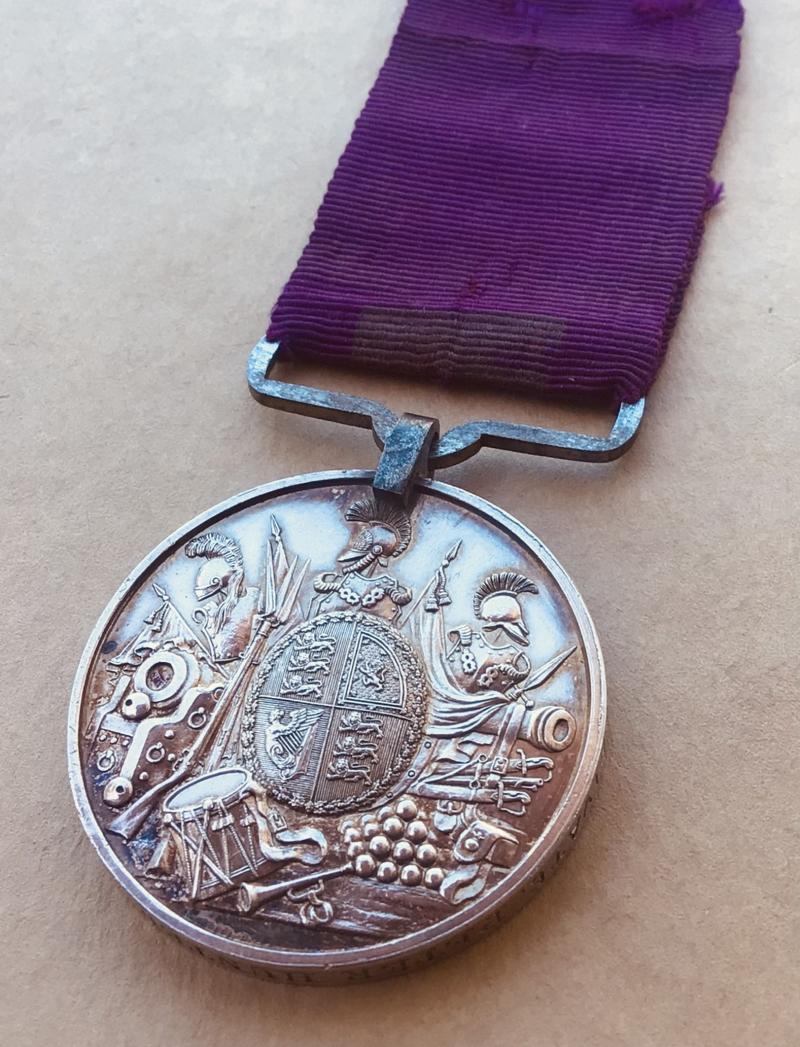
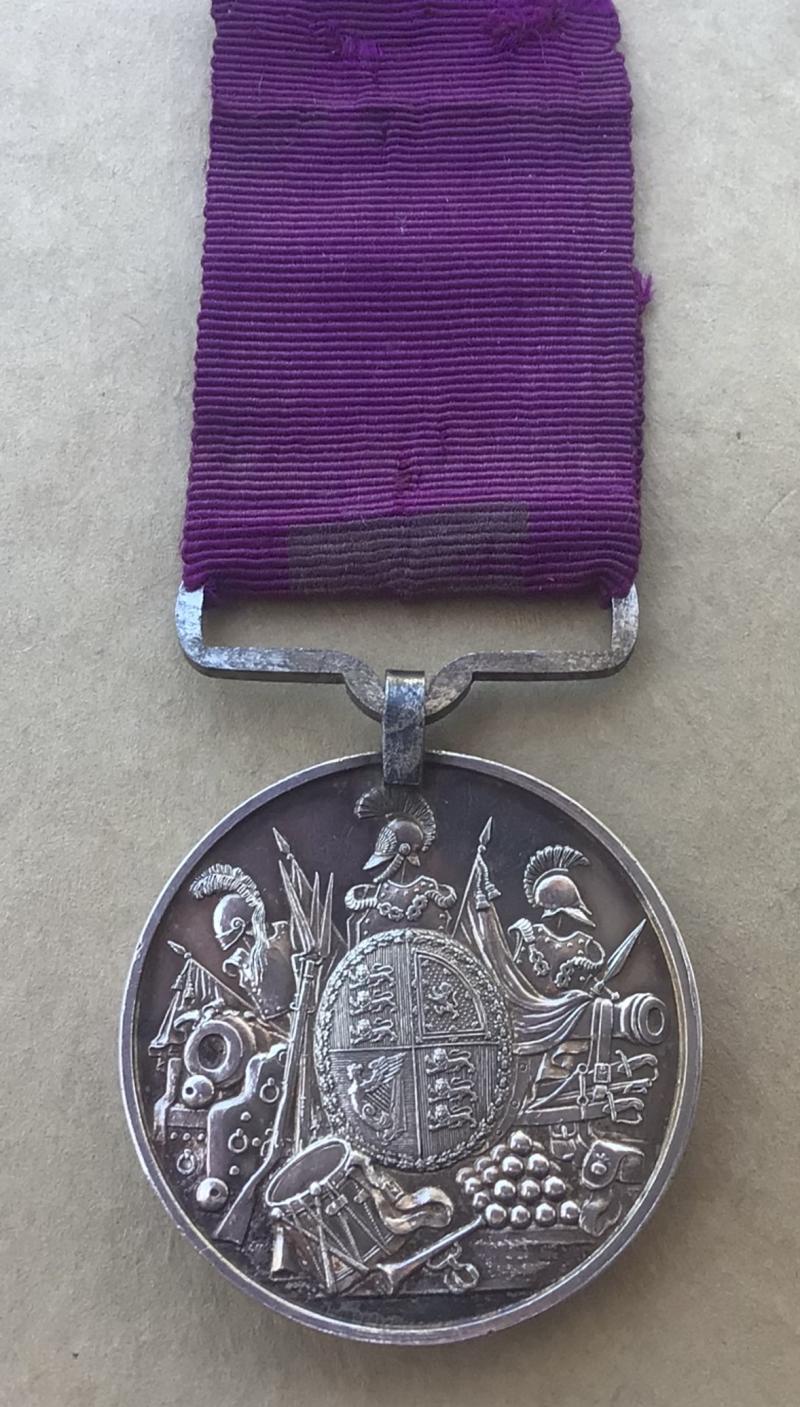
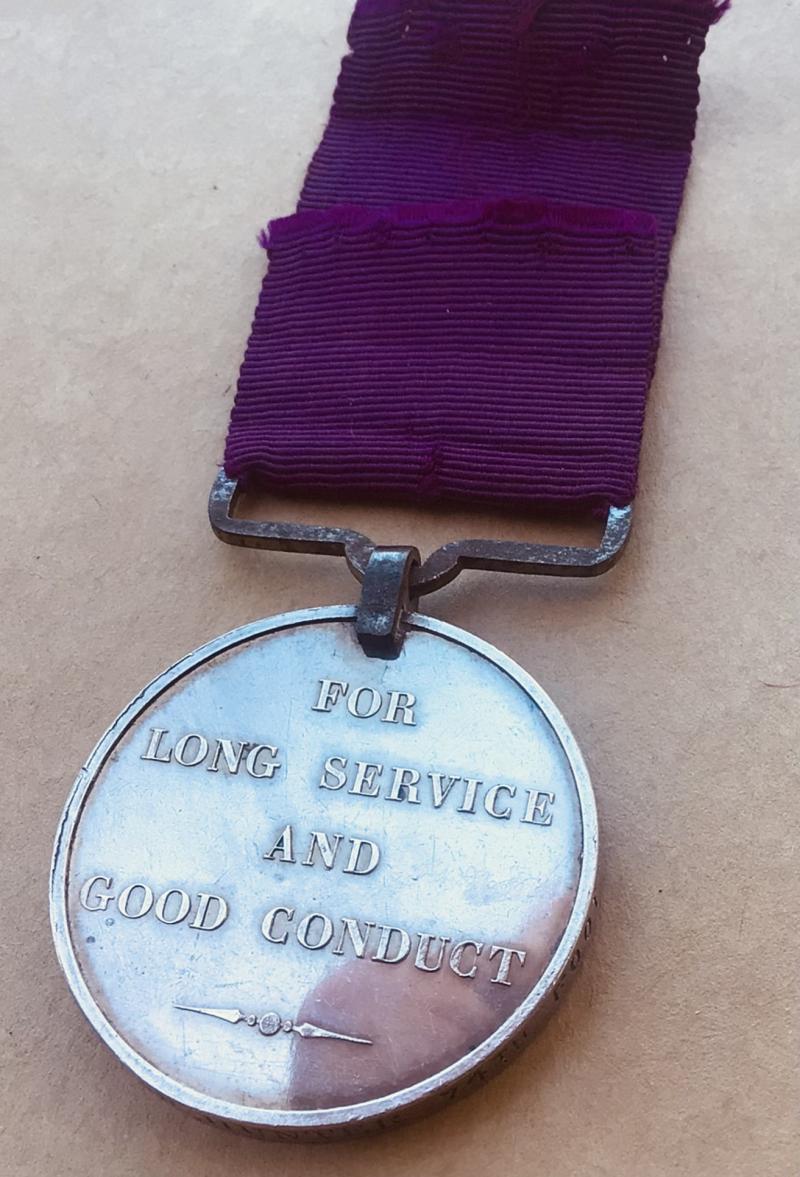
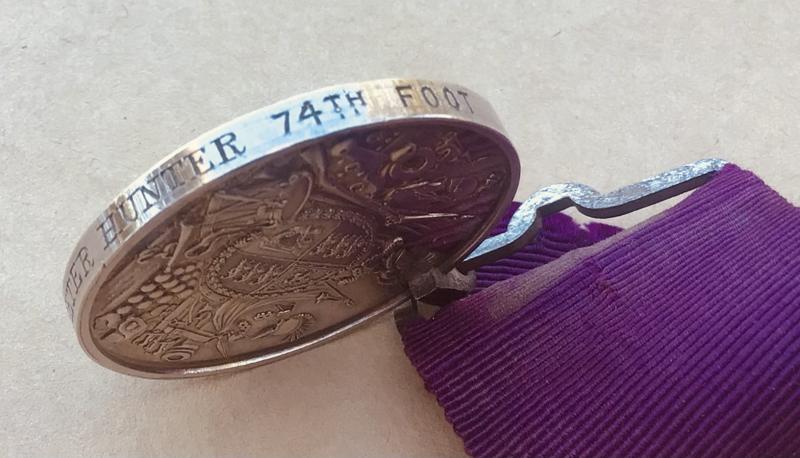
British Army LSGC Medal (VR) - 74th (Highland) Regt of Foot
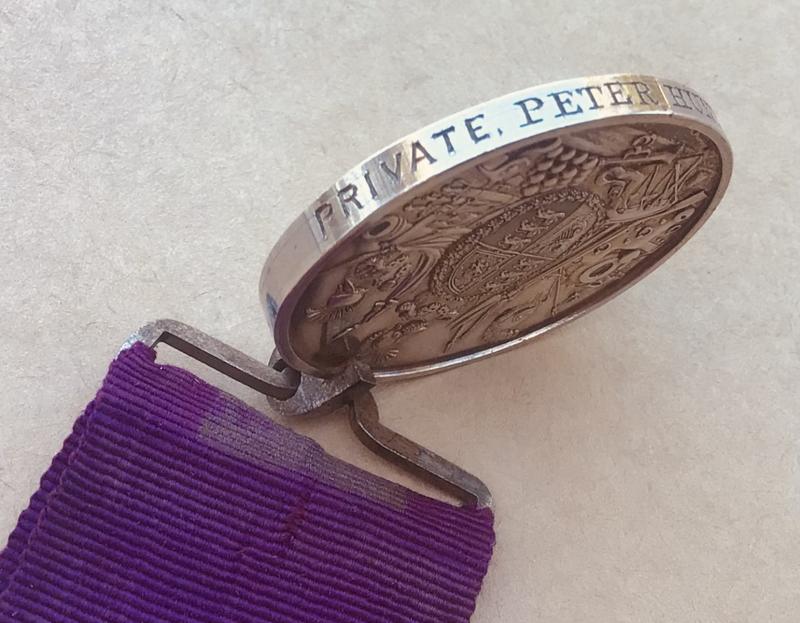
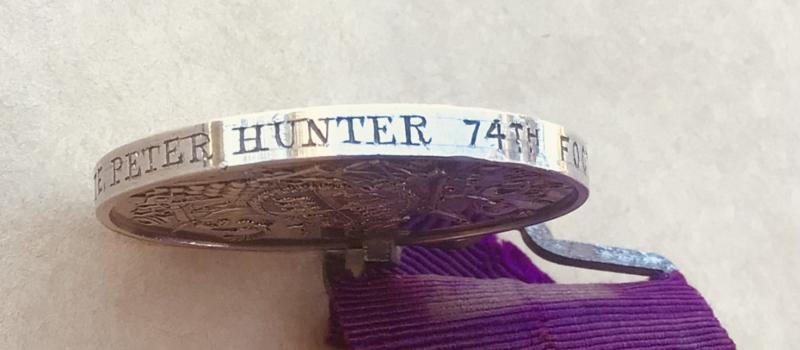
Type II Army Long Service and Good Conduct Medal. Iron clip suspension. Engraved in Roman capitals “ PRIVATE PETER HUNTER 74th FOOT”. Short pice of ribbon.
The 74th (Highland) Regiment of Foot was a British Army line infantry regiment, raised in 1787. Under the Childers Reforms it amalgamated with the 71st (Highland) Regiment of Foot to form the Highland Light Infantry in 1881.
The history of the regiment in the Victorian era-
The regiment embarked from Ireland for Halifax, Nova Scotia in May 1818: on arrival units were detached for service in St. John's, Newfoundland and Labrador and Saint John, New Brunswick. The regiment moved on to Bermuda in August 1828 and then returned home in December 1829. The regiment embarked for Barbados in September 1834 and, after arrival there, moved on to Grenada in December 1834. The regiment transferred to Antigua in November 1835: it was then split into two formations which were deployed to Dominica and to Saint Lucia in February 1837. The regiment moved on to Quebec in Canada in May 1841 before embarking for home and landing at Deal in March 1845. Later that year it reverted to its earlier name as the 74th (Highland) Regiment of Foot. The commanding officer, Colonel Eyre Crabbe, was able to assure the Commander-in-Chief of the Forces, the Duke of Wellington, "that throughout the varied services and changes of so many years, a strong national feeling, and a connection with Scotland by recruiting, had been constantly maintained.
The regiment then sailed to the Cape Colony in 1851 to take part in the Eighth Xhosa War. In 1852 a detachment from the regiment departed Simon's Town aboard the troopship HMS Birkenhead bound for Port Elizabeth. At two o'clock in the morning on 28 February 1852, the ship struck rocks at Danger Point, just off Gansbaai. The troops assembled on deck, and allowed the women and children to board the lifeboats first, but then stood firm as the ship sank when told by officers that jumping overboard and swimming to the lifeboats would mostly likely upset those boats and endanger the civilian passengers. 357 men drowned. The regiment's commanding officer, Lieutenant Colonel Alexander Seton, together with one of his ensigns and forty-eight of his other ranks, were among those that perished.
The regiment embarked for India in 1854 and helped to suppress the Indian Rebellion in 1857 before returning home in 1864. It was deployed to Gibraltar in 1868, to Malta in 1872 and to the Straits Settlements in 1876. It went on to Hong Kong in 1878 before returning to the Straits Settlements in 1879 and returning home in 1880.
As part of the Cardwell Reforms of the 1870s, where single-battalion regiments were linked together to share a single depot and recruiting district in the United Kingdom, the 74th was linked with the 26th (Cameronian) Regiment of Foot, and assigned to district no. 59 at Hamilton Barracks. On 1 July 1881 the Childers Reforms came into effect and the regiment amalgamated with the 71st (Highland) Regiment of Foot to become the 2nd battalion, Highland Light Infantry.
Code: 3576
450.00 AUD