
Japan WW2 Belt of a 1000 Stitches (Senninbari)
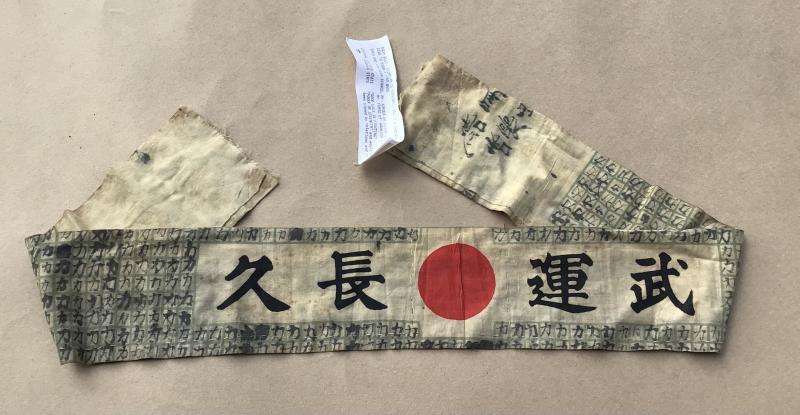
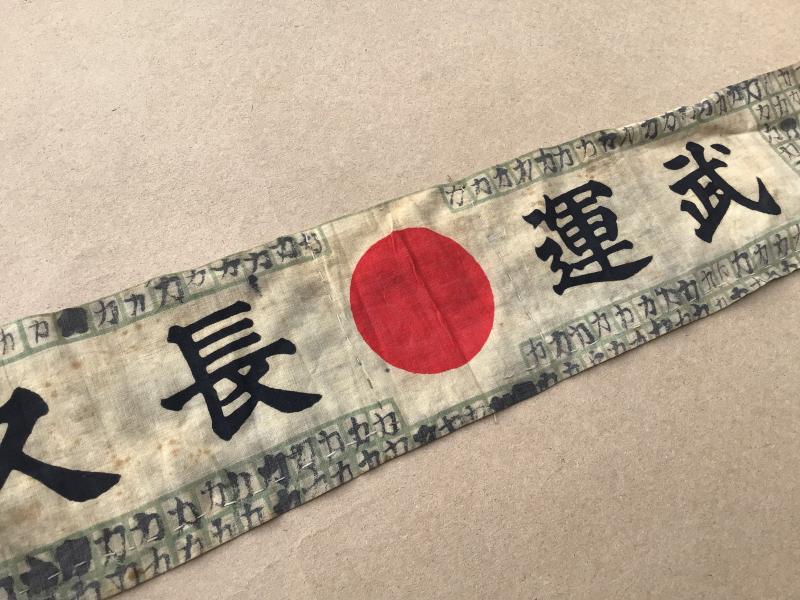
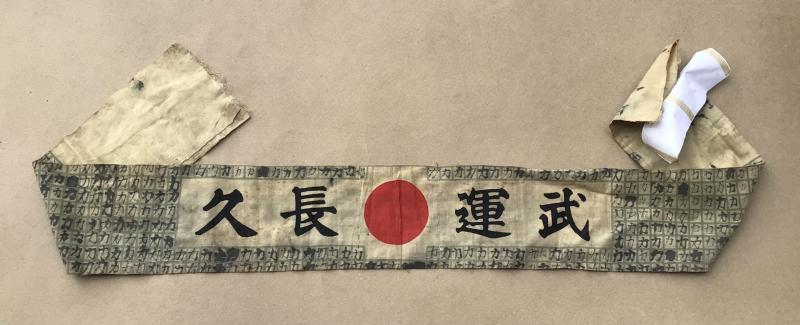
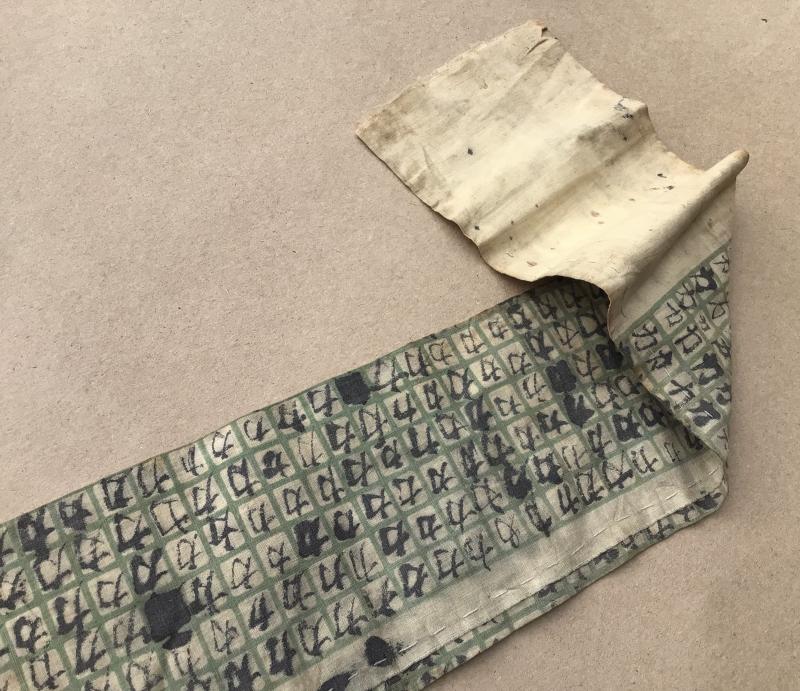
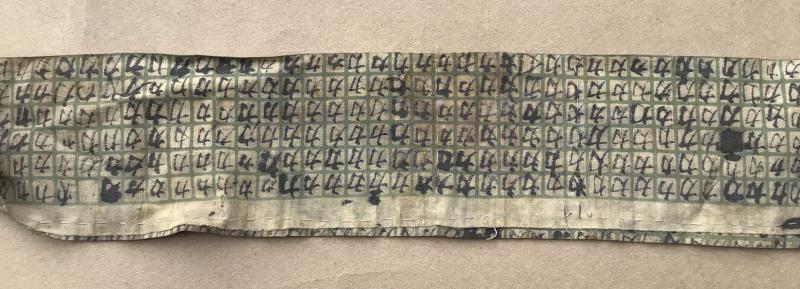
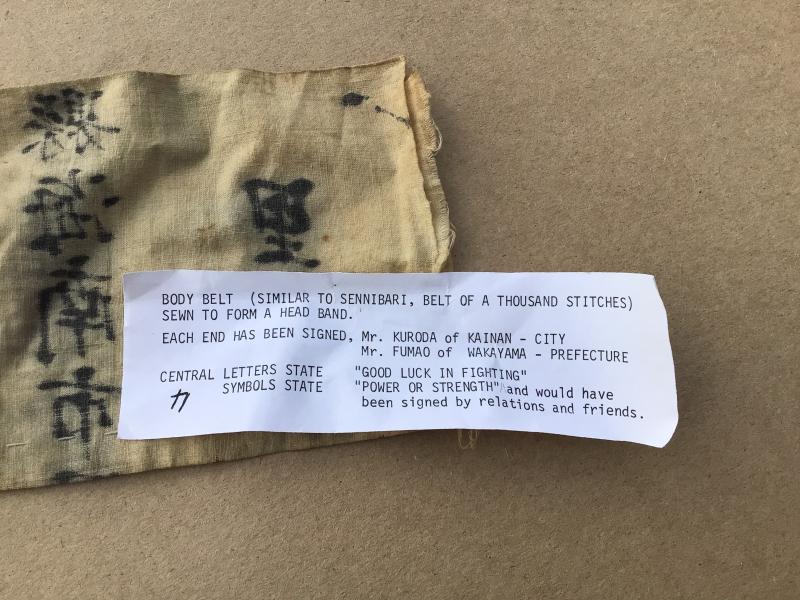
Mid - Late war example. Commercial purchase printed type. The actual stitches were substituted for printed kanji characters, probably “chikara” meaning strength which were supposed to resemble stitches.
Approx 115cm long.
When a Japanese soldier was called to active duty, the women in his family or community usually made two things for him to take along as good luck mementoes. One was an autographed flag (see section on flags). The other was a senninbari. This term literally means “thousand-person-stitches”, but is usually translated into English as “thousand stitch belt”. They were usually cloth strips of a size to be worn around the waist, or sometimes around the head as a headband (hachimaki). More rarely, they were not belts at all, but vests or caps. Those worn around the waist sometimes had straps for fastening them attached directly to the part with the stitches, while in other cases the strip with the stitches was enclosed in a cloth cover with straps on the ends sort of like a money belt. The ones shown in the movie Letters from Iwo Jima (see image above) were in the form of waistbands. Whatever form was chosen, a woman from the family or a community group like the Women's Patriotic Association (Aikoku Fujinkai) or the National Defense Women's Association (Kokubo Fujinkai) would stand in a busy location like the entrance to a train station and entreat passersby to add one stitch each. When one thousand stitches had been collected, the belt was believed by some to have special power to protect the bearer from the hazards of battle. Some Japanese veterans have reported they didn’t actually believe these belts had such power, but they wore or carried them to respect the devotion showed by their womenfolk who did the work of preparing them. The stitches are usually just arranged in multiple rows, but some were also done in patterns like the flag, a patriotic slogan or a tiger. Tigers were a popular motif because they were believed to have the power to roam far from home and return safely, which of course is what people were hoping for on behalf of the soldiers. As a result of this belief, women born in the Year of the Tiger (one of the twelve years in the Chinese zodiac cycle) were allowed to add either twelve stitches or one stitch for each year of their age (accounts differ), rather than just one. Judging from the belts I have seen personally, the stitches did not always number exactly 1,000. Also, to add to their efficacy in bringing good luck they often had coins attached or small pockets into which good luck charms purchased at shrines and temples could be inserted.
Code: 4177