
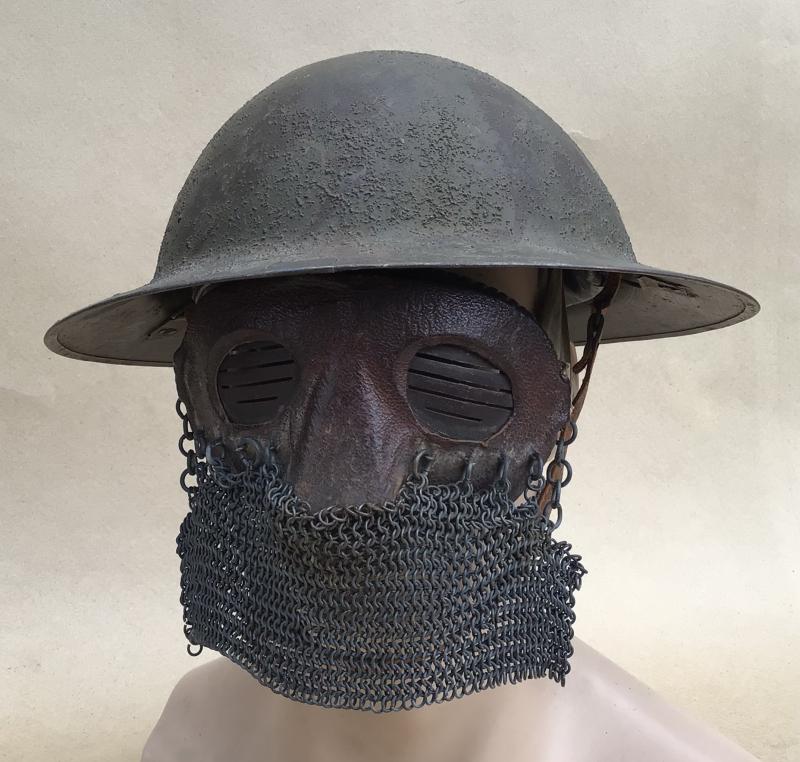
BRITISH WW1 TANK CREW ‘SPLATTER’ MASK FACE VEIL
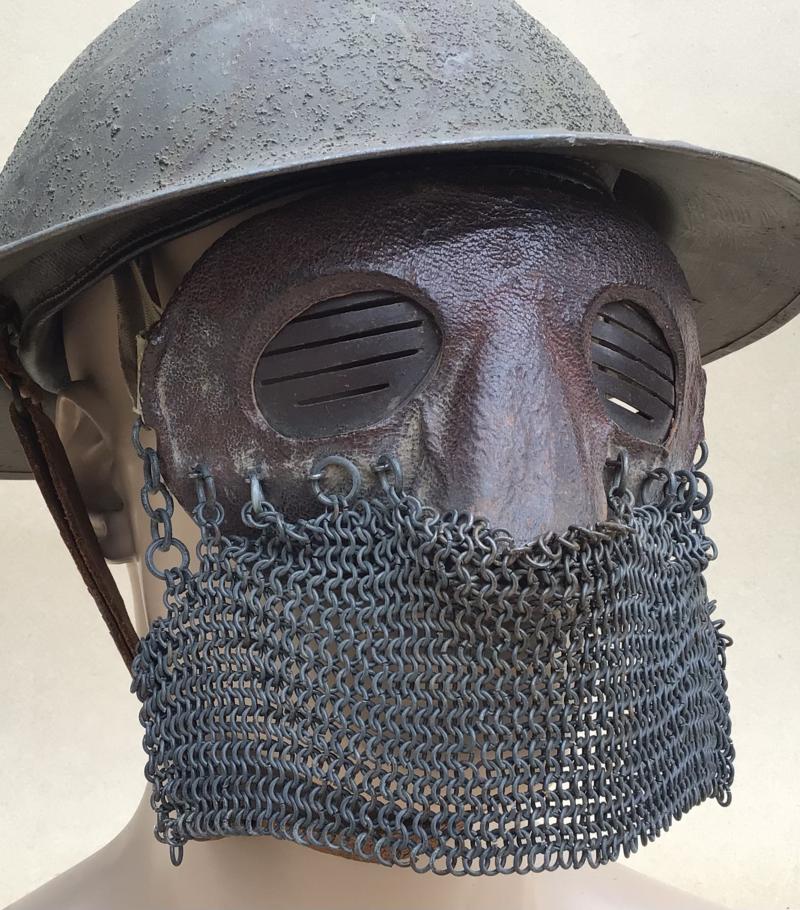
Officially approved on 9 July 1917, the face mask design was given the classic British War Office nomenclature description of ‘Goggles, Steel, with chain mail for use in Tanks’. The initial order was for 7,000, with sources suggesting around 5,000 issued to tank crews for the battle at Cambrai.
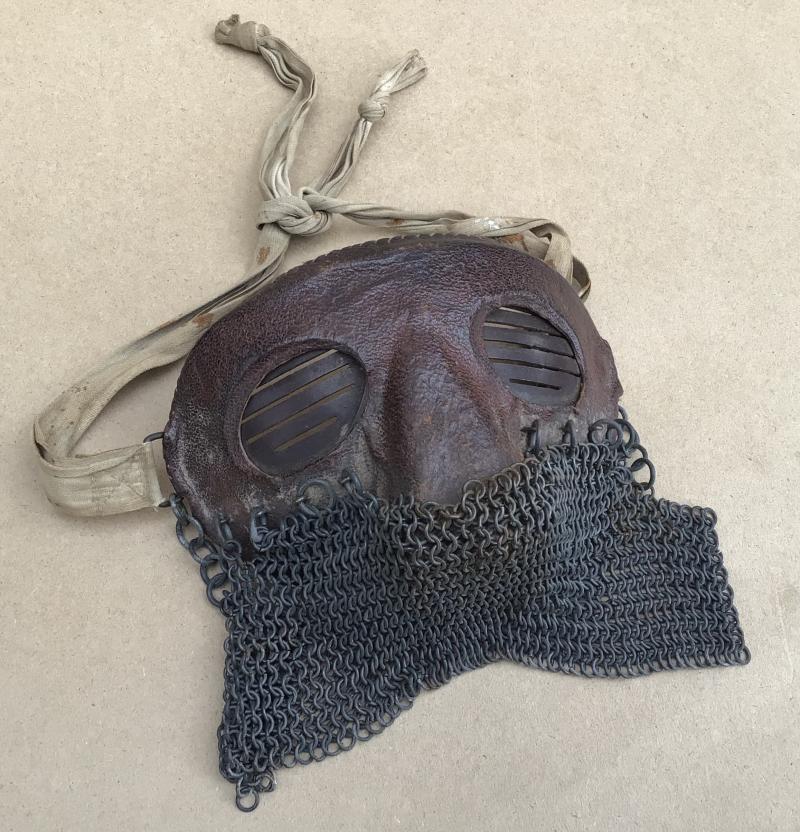
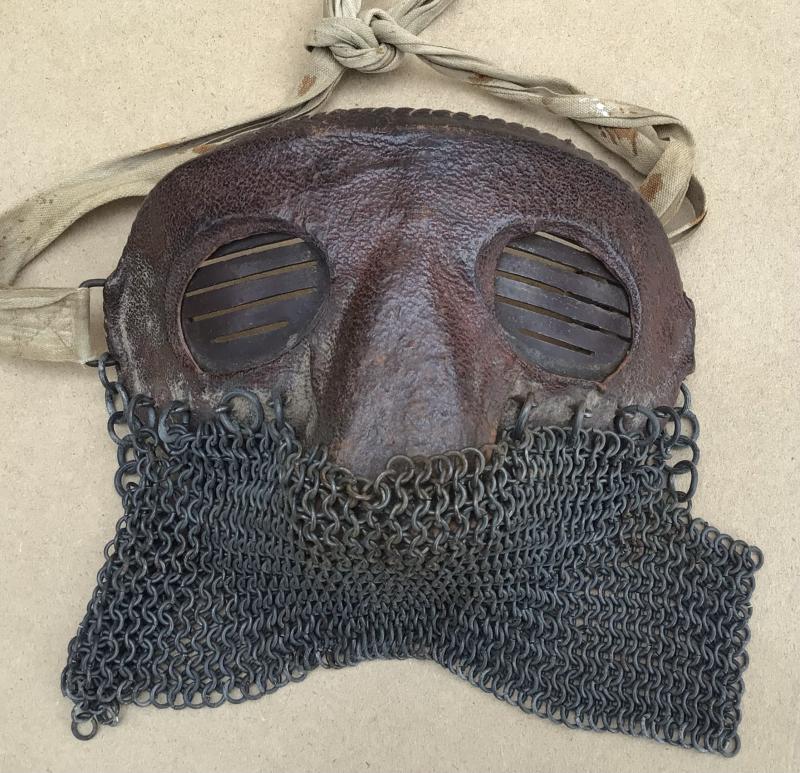
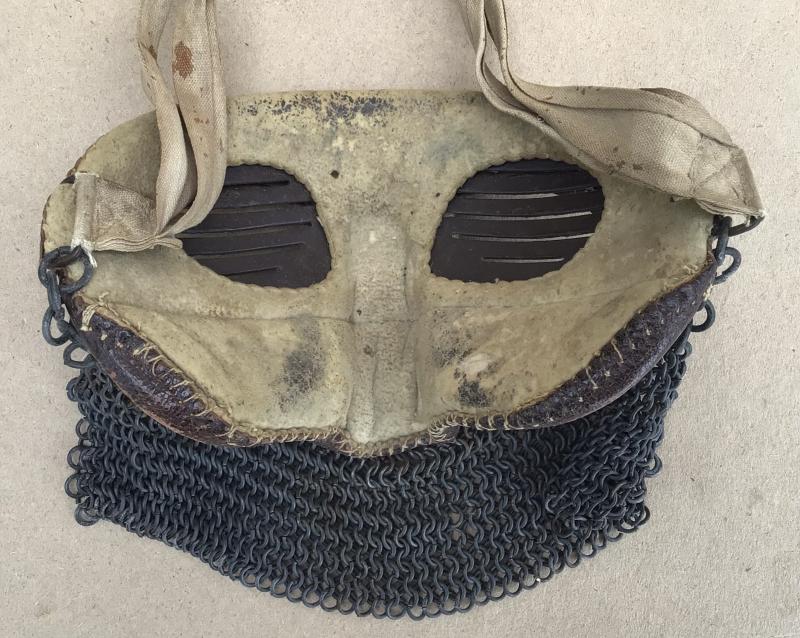
The mask consisted of two steel curved plates plus a nose section covered in leather, below which hung chain mail to protect the mouth and chin. It featured horizontal eye slits in the steel and two cotton ties to secure around the wearer’s head.
These masks were designed to protect tank crew from shrapnel known as ‘splash’ and ‘spalling’, both of which could cause severe injuries. Hot splinters of steel and paint flakes known as ‘spalling’ resulted from damage to the internal armour when the external service was hit. ‘Splash’ was caused by bullets melting on impact with the hardened tank armour, the hot liquid metal finding its way through gaps in the rivetted and bolted plate. Crews would have worn the masks as soon as they came within range of the German machine guns and rifles, otherwise they would wear them pushed up on their head or around their necks. The masks would also need to be removed if attacked with gas.
Tank crew face masks were only used during the First World War (and possibly into 1919). The design of later tanks through the inter-war years and into the Second World War offered more protection to the crew, especially in the welding of armour, dedicated splash protection around vision devices, as well as more periscopes.
Code: 4827
2500.00 AUD